Herbs: How To Grow, Maintain, Plant, and Harvest

Growing fresh herbs is a quick way to add edible plants to your garden. Use fresh herbs for cooking and as remedies. As herbs are versatile, they flourish well in gardens and even in containers on a patio.
Fresh herbs surely make a great addition to the garden. But how will you grow, maintain, and harvest a herb garden?
Keep reading to know everything about tender herbs.
How to Grow and Maintain a Herb Garden
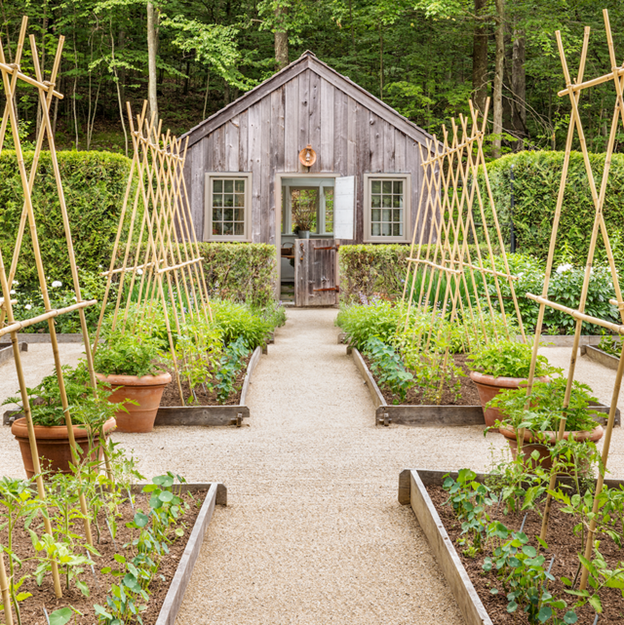
Common herbs to grow in your garden space for the cooking process include French tarragon, mint family, biennial herb, Mexican oregano, bay leaf, and woody herbs.
You can add your favorite herbs to pasta salads, fish dishes, roasted vegetables, French cuisine, and other dishes for maximum flavors and health benefits. Both fresh and dry herbs give earthy flavor. Most culinary herbs do not use the woody stems.
Follow these simple tips to grow beautiful fresh herbs in your deck or garden:
#1 Select Right Time For Growing Herb Garden
Choose the right time to plant fresh herbs; otherwise, your herb garden won’t grow the right way. You can skip cold temperatures because most herbs, especially the annual herbs, don’t do well in such conditions.
#2 Pick a Sunny Spot
Herb plants need at least 6 hours of daily sunlight to grow well. If you have a deck, you can plant your fresh herbs there or choose a sunny herb garden spot with less footfall.
If you have kids at home, you can encourage them to take part in gardening, so they get a closer look at nature. Help them learn and identify new fresh herbs by their appearance, smell, and taste.
#3 Select the Fresh Herbs
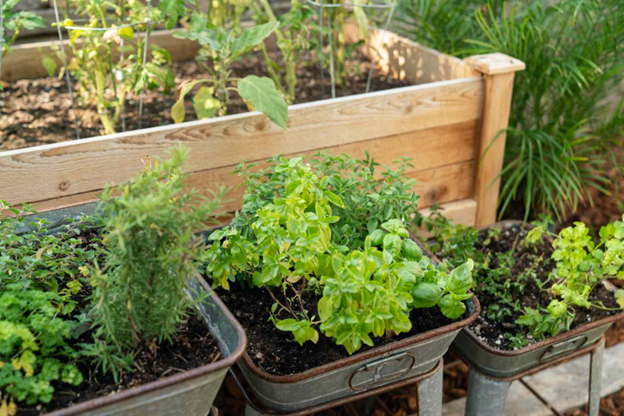
If it’s your first time growing a herb garden, choose the most basic fresh herbs like fresh basil plants, rosemary, thyme, mint, sage, or fresh oregano. These are easy-to-grow fresh herbs and need less care.
#4 Transfer Herbs to New Pots
If you have purchased potted herbs, carefully transfer them to bigger pots so they can grow properly.
Before transplanting the fresh herbs, prepare the potting soil. Then gently remove the fresh herbs from their current pots. You can plant many herbs in pot indoors like lemon balm, whole herbs, and culinary herbs.
Take a closer look at the roots to check how big they have grown. If the roots have expanded around the circumference of the pot, gently break the root balls so they can grow in the new pot.
Prepare the new pot by adding a layer of soil at the button. Then add the herb plants and add the remaining soil.
#5 Regularly Water the Plants
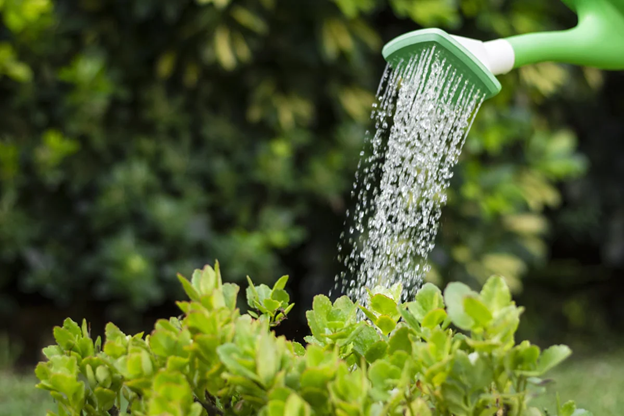
One of the most difficult parts of growing culinary herbs is regularly watering them. If you like in a dry area, thoroughly water the fresh herbs every day so the root doesn’t get dry. You can ask kids to help with the watering task so they can know the basics of growing culinary herbs.
#6 Regularly Prune the Herbs
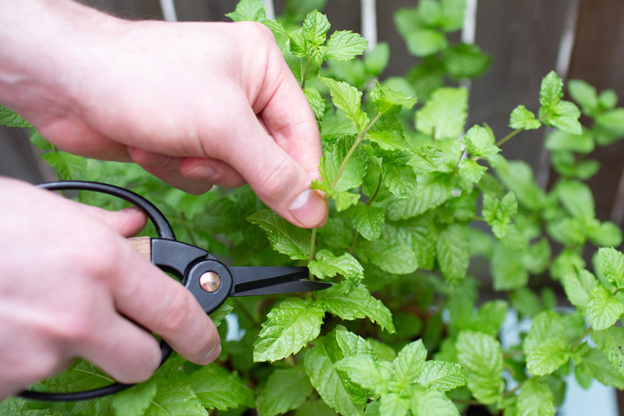
Pruning the fresh herbs for maximum growth is advisable, so they grow outward and not just upward.
For instance, if you have basils and it has 3 sets of leaves, prune it above the 3rd set. Regularly do this, so your herb plants grows properly. Don’t forget to remove the flowers as they bloom.
Perennial Herbs
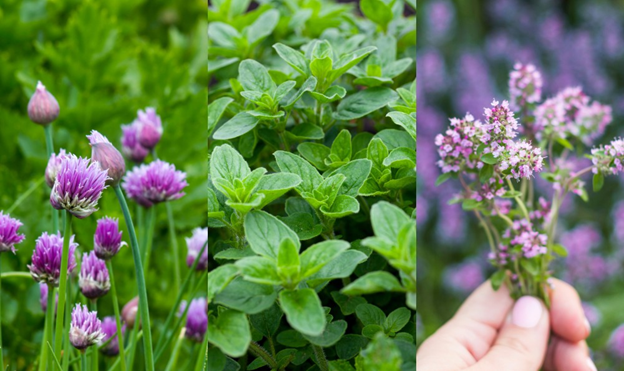
When growing herbs, you cannot skip perennial herbs because they are super easy to grow and need less care. Once you plant them, the herbs can be harvested for a number of years. Furthermore, they are great for attracting beneficial wildlife.
Common perennial herbs include creeping thyme, oregano, parsley, lemon balm, fennel, sage, Roman chamomile, lavender, salad burnet, sweet marjoram, and more. You can harvest perennial herb plants just as you harvest other culinary herbs.
Drying herbs like dried basil, dried marjoram, and other dried spices are also commonly used for maximum flavor.
While cooking, place the chopped herbs on ice cube trays to get intense flavor.
How to Harvest Herbs
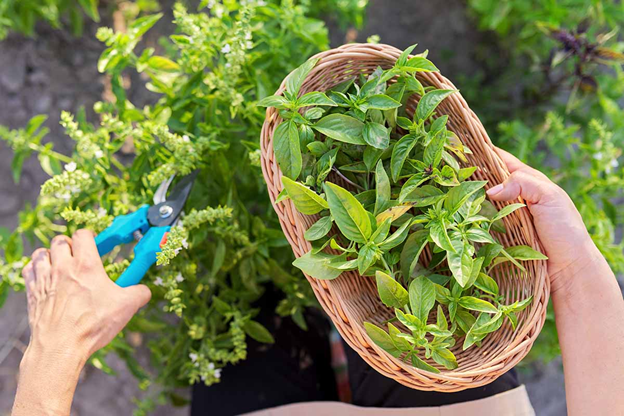
Harvesting Herbs From Leaves
The harvesting method varies depending on the type of fresh herbs you have planted.
For instance, fresh basil or oregano are branching plants with main stems and side branches. You can cut a fresh set of leaves to harvest these fresh herbs to stimulate new growth. New gardeners are often shy about harvesting their indoor herb gardens, but it’s an important step to prevent leggy growth.
Leaves or stalks that emerge from the center of the plant can snip down the soil. Bring a basket before starting the harvest so you can carry the leaves properly.
Harvesting Herbs From Flowers
Fresh herbs like chives, chamomile, lavender, and borage can be harvested from their flavorful flowers. When harvesting the flowering herbs, look for the blossoms that are almost open. But the flower buds harvesting method varies from herb to herb.
Harvesting Herbs From Seeds
Did you know fresh herbs like coriander, dill, and anise can be harvested from their seeds? You can use these seeds as dried herbs in the kitchen.
To harvest fresh herbs for seeds, wait for the seed heads to dry and get brown. Then use herb snips to clip the seeds into a container. Let the seed stay in a well-ventilated spot for a while so it gets dry. After a few days, transfer the seeds into a jar.
Medicinal Fresh Herbs
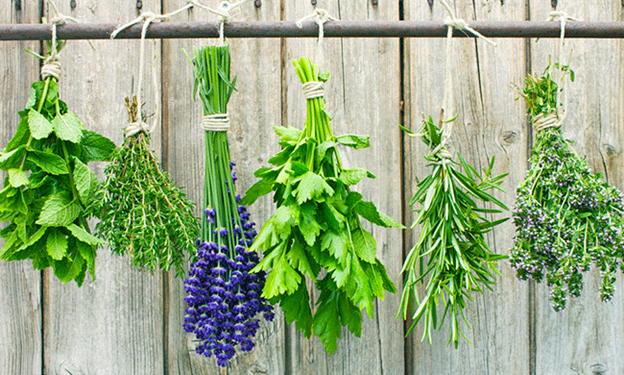
If you want to grow fresh herbs with the best medicinal properties, you can pick chamomile (flower), ginseng (root), ginger (root), feverfew (leaf), garlic (cloves, root), and more.
You can plant woody herbs and other herbs during the growing season.
Conclusion
Fresh herbs are one of the easiest plants to grow in the garden. They can add a pleasant touch of life to your yard because they fit in small spaces and are easy to take care of. When growing herbs indoors, use rich moist soil and paper towels. Purchase the herbs from a local nursery and make drainage holes.
Growing and maintaining fresh herbs is easy. But if it’s your first time growing herbs, you can consult experts so your plants don’t die. As there are so many benefits of growing your own herbs, start your herb garden today.
Want to learn how to create the perfect Herb Garden, check out this guide.